Polyplastic Group board chairman Lev Gorilovsky: The company is prepared to build pipe plants abroad for major infrastructure projects


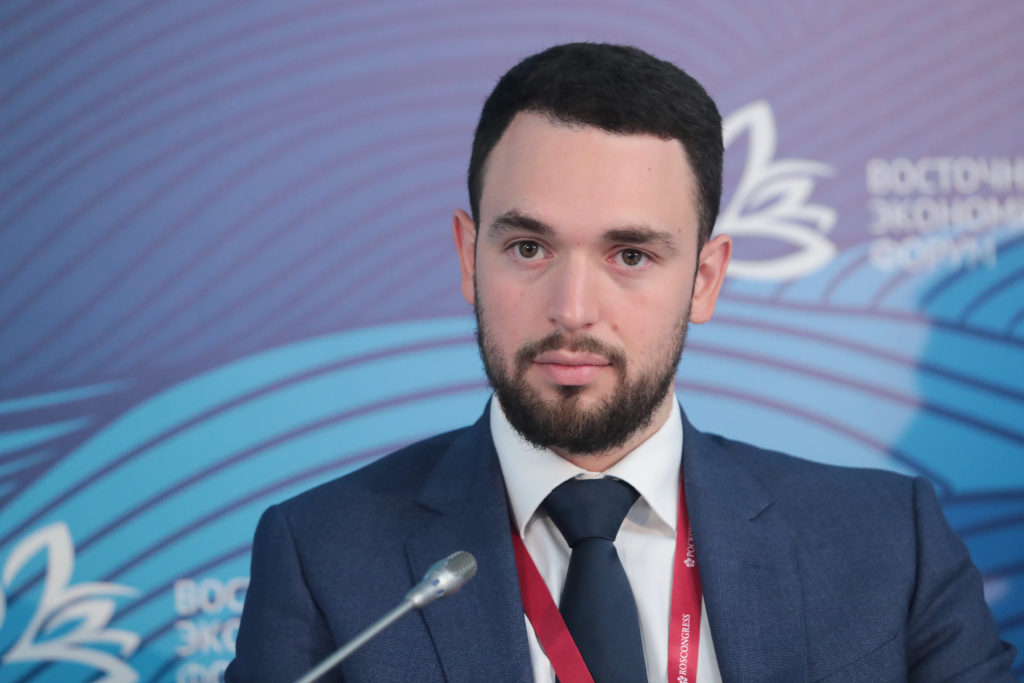
Lev Gorilovsky
Photo: Roscongress Foundation
Polyplastic Group, Russia's largest manufacturer of plastic pipes, acquired a new strategic partner this past summer in the Prime First closed-end mutual investment fund, which acquired a stake in the group. Polyplastic Group board chairman Lev Gorilovsky spoke in an interview with Interfax about the goals that the new partner might help achieve and what the company did with the proceeds from the deal, as well as about a major export project for state nuclear corporation Rosatom and the successes of the group's software development arm.
Q.: First things first, in July the Prime First closed-end mutual investment fund, managed by Dialog Investments LLC, became a shareholder of Polyplastic Group. There is virtually no public information about these entities. Could you explain who they are?
A.: All I can say about this right now is that our partner is well acquainted with the oil and gas industry.
Q.: And what plans motivated the change in ownership structure?
A.: We prepared this deal proceeding from the logic of the company's further development. All proceeds went toward reducing the group's debt burden. In the current circumstances of generally weakening demand and fairly high key rates, reducing debt is an important part of stability.
We see an opportunity for joint projects taking into account their accumulated expertise. We are now trying to fully localize the set of solutions for the oil industry at our plants. We see potential for increasing sales in this area. We expect that within the context of cooperation there will be projects on equipment for treatment facilities, various modular equipment, as well as a number of other interesting projects.
Furthermore, the appearance of a new partner allows us to develop in a faster format than, for example, with an IPO. Technically, we've long been ready to go public - we've been preparing consolidated financial statements for many years, they are verified by auditors. But we just don't see the point of this right now.
Q.: What amount of investment are you planning for this year?
A.: We're planning to invest about 1.8 billion rubles this year. One of the main events this year is the launch of production of pipes made from so-called PVC-O [molecularly oriented polyvinyl chloride]. We launched the first such production in 2023 and now we are opening, have essentially already launched, a line to produce large-diameter pipes. The potential of this high-pressure pipe is very high, because it weighs a lot less than alternative options and can be installed fairly quickly.
We're also planning to launch a line to produce polyethylene sheet this year, and power grid systems are being modernized at a number of existing production facilities.
Q.: Do you expect any deals to acquire or sell assets in the near future?
A.: We are constantly considering something in this regard and, indeed, there are deals that we are now exploring. Most promising in this regard is production of equipment for pump stations, for local treatment facilities, modular water treatment plants. There are fairly large transport projects where treatment of rain and storm runoff is needed and our current production capacity is insufficient to carry out such large infrastructure projects on time.
We also have several projects not related to pipe under consideration, but I won't talk about them yet because they still haven't been presented to our board of directors.
Q.: Are you considering the possibility of building new plants abroad?
A.: Yes. The company has now begun implementing a project for Rosatom. We will participate in the production of large four-meter pipe for deep-water wastewater outlets in Egypt, at the El Dabaa [nuclear power] plant. The overall deadline for implementing this project is by the end of 2028, but pipe production is supposed to already be launched in the middle of 2027, and we're working on this with an Egyptian partner. Actual construction at this facility is already supposed to start in the fourth quarter of this year.
Whether we'll be able to remain there after this as an Egyptian manufacturer is a big question. We'll see. But in the next 18 months to two years we will be fully focused on this one project.
If we're talking about other possibilities, any such plant, of course, needs anchor demand. And few partner countries are prepared to sign an offtake contract to guarantee acquisition. But if similar nuclear plants or other facilities will be built in other countries, then, of course, with such anchor contracts we could set up production in these countries. Therefore, seeing reports about plans to build plants in other countries, we analyse the opportunities.
Q.: Are you exporting pipes from Russia right now?
A.: To Kazakhstan, to Belarus. But there is no systemic, large amount of exports right now.
We're working on exporting technology, since there are countries that are interested in our unique technological solutions. We will try to promote advanced expertise in high-pressure plastic pipes for the oil and gas industry, in spiral winding of PVC profile [trenchless method for rehabilitating worn-out pipelines and sewers] and in a number of other areas in other countries if partners on the ground see a sufficient amount of demand.
Q.: Speaking of plastic pipes for the oil and gas industry, the launch of the Kogalym plant in partnership with Lukoil is expected in 2026. Will you make it on time?
A.: Yes, everything is going as planned. The plant has already been built, commissioning is underway. Technically, the plant is already virtually ready to start production. The full-fledged launch will be in the fourth quarter.
We are acting as the technology partner in this project. We're responsible for building, outfitting the plant, its launch.
Q.: Two years ago you said that demand in this segment lags behind supply. Has the situation changed, have you managed to catch on in this market?
A.: In this time most large companies - Tatneft , Gazprom Neft , Rosneft , Irkutsk Oil Company (INK) and others - have begun implementing pilot projects to use polymer pipes. Therefore, we believe that nothing stands in the way of more widespread application of this technology. We hope that this will become a new standard, but for now this is not the case. There are still many metal pipes in these diameters.
Returning to the Kogalym project, I'll add that we are, after all, counting on demand not only from Lukoil but also other oil and gas producing companies that also work in the Khanty Mansi Autonomous District and nearby regions.
Q.: Production of rubber and plastic products in Russia fell 6.7% year-on-year in 2025. And against this backdrop, in January 2026 you put into operation a compound production line with capacity of 6,000 tonnes per year and a cost of more than 400 million rubles. Are you confident that this investment will pay off?
A.: At current demand, about 3,000 tonnes of various TPE compounds come [into the country] and we, of course, aim to completely replace these imports. But this can't be done in one year.
We're working on introducing our compounds into production at [carmaker] Avtovaz , but their current production plans, unfortunately, are now lower than they were at the beginning of the year.
I think there is potential for expanding the use of domestic compounds, if only because a lot more of them than the whole compound market in the Russian Federation come into Russia in finished products. Manufactures of white goods could use domestic materials, but they're just sitting idle now.
We hope that the Industry and Trade Ministry will support the industry proposal to factor polymer materials into the points-based assessment of localization of manufactured products. Today only a small part of this scoring concerns the use of domestic raw materials.
Q.: What are the forecasts for Polyplastic Group's revenue and profit in 2026?
A.: I'd prefer not to talk about this, because a great deal depends on external factors. The program in southern Russia amounts to about 30% of our total production and sales, and the current situation - as concerns both attacks and fuel - is slowing the implementation of infrastructure projects.
The pipe sector today has the largest gap between demand and supply in all of modern history. Many businesses have cut investment programs due to the high key interest rate. Right now only about 1% of water supply and wastewater disposal networks are being updated, and about 3-4% are aging.
Of course, this builds deferred demand, and we hope that many businesses will be able to launch long-term modernization programs as rates are lowered and, perhaps, subsidized. But for now this is an objective constraint.
At the same time, our digital solutions division is rapidly developing. One of our companies won a Transport Ministry tender to install software for digital construction management [control over construction process without paper documents, preparation and approval of as-built documentation], with the right to fine-tune this solution. This product has potential to enter other sectors. We already have the experience of installation at a major oil and gas company.
